
You Don't Have a Community. You Have an Audience.
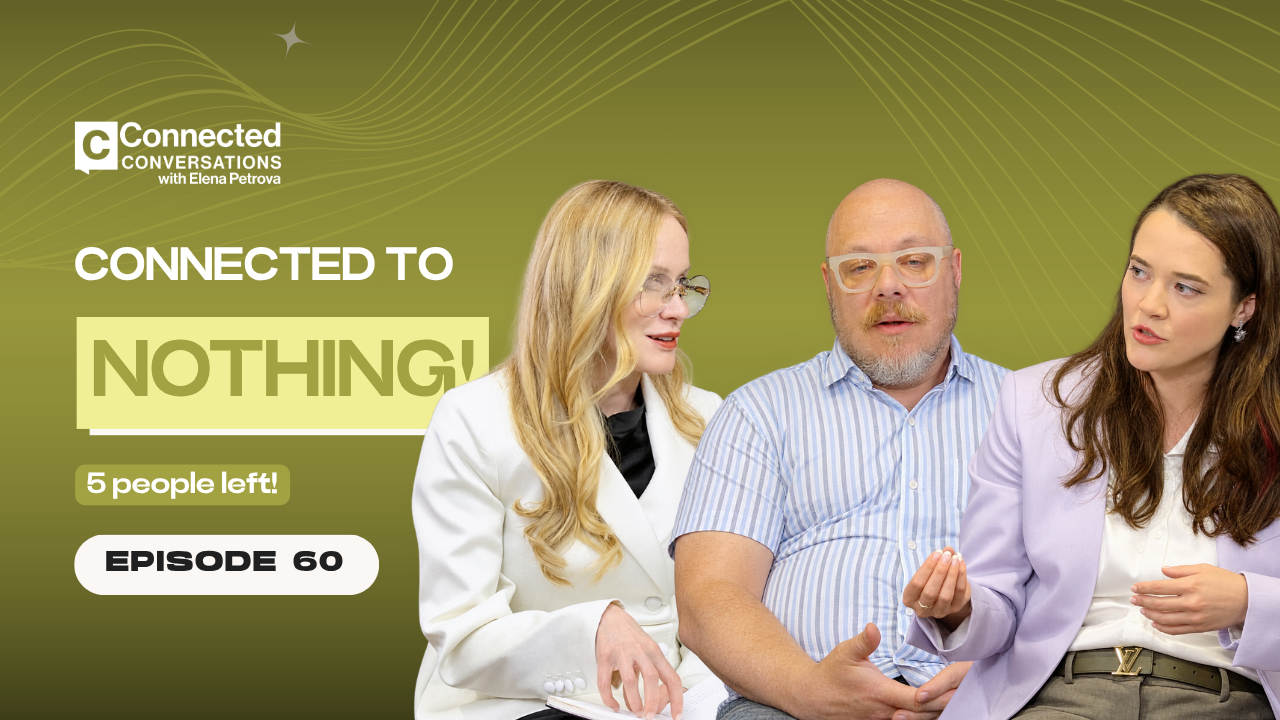
Almost every organization says it is building a community. In this episode of Connected Conversations, Sam Swindler and James Pelz explain why most of them are building something else, and what it takes to build the real thing.
Belonging is not the highlight reel
Asked when she last felt she truly belonged, Sam Swindler described her engagement party: friends and family in from out of town, the whole house, as she put it, wrapped in a warm hug. She could show up exactly as she was, and the people there were there to see her.
Then she complicated her own answer. Community, she said, isn't the highlight reel you see on Instagram. It's back and forth. One of her bridesmaids was going through one of the hardest seasons of her life while helping Sam celebrate one of the best, and each of them was holding space for the other at the same time. That is the part a feed never shows, and it is the part that makes belonging real.
Talking, trading, and showing up
The most useful idea in the episode for any leader is a three-way distinction that almost everyone blurs.
An audience, Sam explains, is people you talk at. It runs one to many, with little real dialogue. A network is people who interact with each other and trade resources and ideas. A community is different in kind: people who are invested in showing up for each other on the good days and the bad ones, and who move toward a goal together.
The trap is that leaders usually intend to build a community and then act in ways that build an audience. They decide the message, broadcast it out, and forget that a real community talks back. It pushes. It says "what about this?" and the direction shifts. If nothing your people say can change your course, you don't have a community. You have listeners.
Four conditions, and the one that opens the rest
Sam and James name four conditions of belonging: curiosity, shared purpose, participation, and trust.
Trust, Sam argues, is the one leaders most often treat as an afterthought. Expertise doesn't earn it automatically. Trust takes repetition: showing up at a steady cadence, being dependable, and being the same person with the same message everywhere, rather than one version of yourself on one platform and another somewhere else.
Curiosity is James's favorite, and he calls it the key that opens everything else. His proof is a story from a networking lunch. Seating was tight, and he landed at a table where a political argument was underway, from the opposite side of the divide to his own. As he sat down, five people got up and left. He was their exit.
He could have dug in, traded statistics, and gotten nowhere. Instead he asked questions. What do you think? Why do you think that is? It took about 45 minutes. Nobody changed sides. But by the end, the other man had softened, thanked him for the conversation, and said he could see the issue in a way he hadn't before. Curiosity turned an argument into common ground. The mistake most of us make, James says, is that we want to be seen for what we know, so we walk in ready to explain why the other person is wrong.
People buy on feeling
James brings the same lens to marketing. If people bought the cheapest or smartest product, he points out, every category would have exactly one product. They don't. People decide based on how much they relate to something, who else uses it, how it fits their life, and how it makes them look. Then they look back and call it the smart choice. In reality, it was the one that made them feel best. That is exactly why community matters commercially: it is where those feelings get built.
Community is a burden. Budget for it.
Neither guest pretends this is easy. Building community is, in their word, inefficient. It asks you to sit in discomfort and hear feedback you don't want, sometimes about the core of your business. And it resists measurement. You can count clicks and purchases, James says, but not hearts and minds.
Which is also why belonging can't be manufactured. You can design the conditions. You can't force the outcome. And once you have something real, Sam adds, it carries a maintenance cost. You can't set it and forget it. You keep investing, keep people welcome, and keep bad actors out.
Connected to something, or to nothing
The episode closes on AI, and James frames the stakes precisely. There is an itch in our biology for community, and AI is getting very good at scratching it one-on-one. His worry is that we are treating the symptom and skipping the purpose. Individually, we feel connected to something. In reality, we are connected to nothing. And a society that stops needing each other to raise the barn stops finding common ground at all.
Monday morning
For leaders who want to start this week, the advice is concrete. Sam: stop assuming you know what your people need. Start listening, and build real space for them to contribute, even when it's uncomfortable. James: stop gathering only like-minded people. Look for larger groups with more difference in them and walk in curious.
Asked what conversation more people should be having, Sam returned to shared humanity. Wherever we're from, we all want to be seen, heard, and celebrated, and far more connects us than separates us.
Listen to Episode 60 of Connected Conversations, hosted by Elena Petrova, Founder and CEO of Ad Astra, Inc. and AdAstraConnect. Connected Conversations is produced by Ad Astra, Inc.
You can watch/listen to this episode here:
🔴 YouTube: https://www.youtube.com/watch?v=dZiLxl06syc
🟢 Spotify: https://shorturl.at/Gc8BL
⚫ Apple Podcast: https://shorturl.at/mIKj2
🔵 Amazon Music: https://shorturl.at/jWl9P