Medical Translation Services: What Accuracy Really Means in 2026
Medical Translation - Translation
The healthcare sector is experiencing a massive wave of technological evolution. Artificial intelligence, automated diagnostics, and cloud-based patient portals have fundamentally transformed how medical professionals deliver care. Yet, amidst this rapid digital transformation, one foundational element of healthcare remains unchanged: a single misplaced decimal point, an ambiguous instruction, or a poorly translated verb can have immediate, life-altering consequences for a patient.
For global life sciences firms, hospital networks, and medical device manufacturers, scaling international operations requires absolute linguistic precision. In a clinical or regulatory setting, there is zero room for error. Utilizing standard, unvetted automated translation or generalist services to handle highly specialized health data is an operational risk that can lead to severe clinical failures, regulatory rejections, and legal liabilities.
Securing true healthcare translation accuracy in the modern medical landscape requires moving past basic word substitution. It demands a highly structured, scientifically rigorous localization framework designed to protect patient safety and ensure strict international compliance.
Key Takeaways
-
Beyond Basic Language: True accuracy in medical localization requires absolute domain specialization, where linguists hold advanced technical or medical credentials alongside native linguistic expertise.
-
The Regulatory Shield: Working with certified medical translation services is essential to meeting strict regulatory approval frameworks, such as FDA guidelines in the United States and MDR/IVDR mandates in Europe.
-
A Patient-Centric Model: Precise linguistic work directly impacts clinical trial participation, patient onboarding safety, and overall healthcare equity for non-native speaking communities.
The True Definition of Accuracy in Medical Document Translation
In standard commercial marketing, an editor can rephrase a sentence to sound more elegant or alter an adjective to improve brand tone. In medical document translation, phrasing must be literal, standardized, and perfectly aligned with recognized clinical terminologies.
True medical accuracy is measured by three strict pillars:
1. Absolute Contextual and Terminological Precision
Medical language relies on highly specific, Latin-derived terminologies and complex abbreviations that change meaning depending on the medical specialty. For example, the abbreviation "OD" can mean oculus dexter (right eye) in ophthalmology, overdose in emergency medicine, or occupational disease in public health. A general translation engine or a non-specialist translator can easily confuse these acronyms, creating dangerous errors in patient records or clinical summaries.
2. Strict Adherence to Regulatory Standards
Whether you are translating a clinical trial protocol, an Informed Consent Form (ICF), or Instructions for Use (IFU) for a new surgical device, your documentation must pass intense regulatory scrutiny.
[Source Medical Documentation]
│
▼
[Rigorous Dual-Linguist Workflow] ──(Validation & Review)──► [Zero-Error Output]
│
▼
[FDA / MDR Regulatory Approval]
Global regulatory bodies like the FDA in the US or the European Medicines Agency (EMA) will completely reject an application if the localized documentation contains inconsistent terminology or fails to follow strict formatting guidelines.
3. Patient Comprehension and Cultural Formatting
Medical assets are divided into two distinct categories: professional-facing (such as clinical trial parameters or physician manuals) and patient-facing (such as discharge summaries, dosage guides, and consent forms).
While a physician understands complex clinical jargon, a patient requires clear, accessible phrasing. True accuracy means translating complex medical concepts into clear, plain language that an anxious patient can easily read and follow, minimizing the risk of accidental non-compliance or incorrect dosages.
High-Stakes Sectors Requiring Certified Clinical Translation Services
Linguistic errors in the healthcare space quickly compound into major financial and operational crises. Several core sectors require dedicated, specialized language pipelines:
Pharmaceutical Development and Clinical Trials
As pharmaceutical companies migrate clinical trials to global cohorts across Latin America, Europe, and Asia, managing multilingual documentation becomes a core operational challenge. Localizing protocol sheets, adverse event reports, and patient diaries accurately is vital. If an international participant misunderstands an instructions sheet and drops out of a study, it can delay the entire trial timeline, costing the pharmaceutical firm millions in delayed market launches.
Medical Device Manufacturing
Medical hardware and software systems must comply with strict localized requirements before they can be sold internationally. Under regulations like Europe’s Medical Device Regulation (MDR), every piece of user-facing content—from digital interface text to physical user manuals—must be accurately localized into the official languages of the destination countries. A single error in an instructional manual can lead to product recalls, costly redesign sprints, and immediate legal exposure.
Public Health and Hospital Systems
Hospital networks across North America serve incredibly diverse populations speaking hundreds of languages. Providing clear, on-demand document translation for intake forms, medical histories, and discharge sheets is a direct civil rights requirement. When a hospital ensures all patient records are accurately updated in the patient's primary language, they lower readmission rates, prevent diagnostic errors, and improve overall patient trust.
Best Practices for Managing Medical Localization Risk
To protect patient safety and maintain regulatory compliance, healthcare and life sciences organizations should structure their translation processes around industry-vetted quality standards.
1. Deploy a Dual-Linguist TEP Workflow
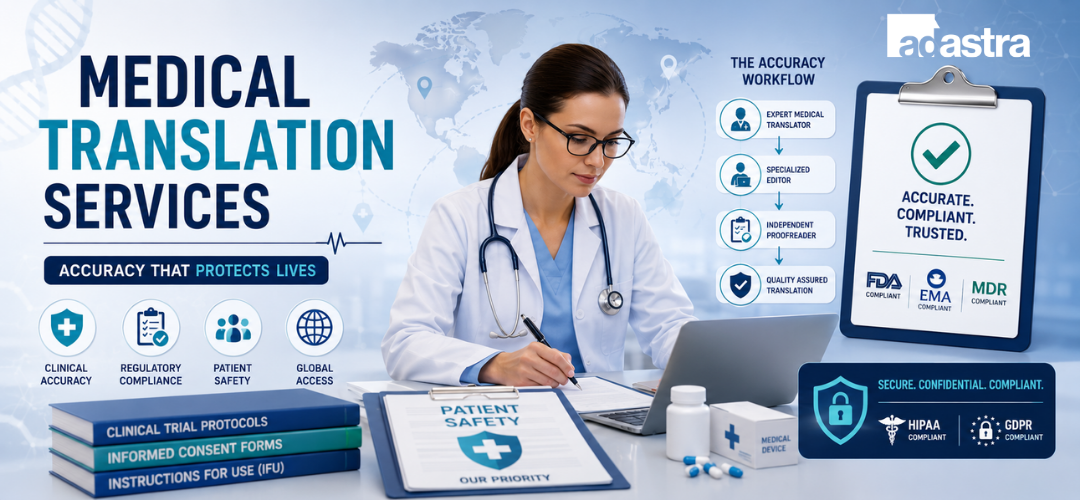
Never rely on a single individual or an unverified automated tool to translate critical medical text. All high-stakes documentation should move through a comprehensive Translation, Editing, and Proofreading (TEP) workflow. Under this system, a primary medical linguist translates the text, a second independent subject-matter expert edits the work against the source file, and a final proofreader verifies formatting and layout consistency.
2. Implement a Formal Back-Translation Process
For highly sensitive assets like clinical trial consent forms, implement a formal back-translation protocol. This process involves taking the newly translated document and having a separate, independent linguist translate it back into the original source language from scratch without seeing the original text.
[Original English Text] ──► [Translated Spanish Version] ──► [Independent Back-Translation to English]
│
▼
[Compare for Hidden Variances]
Project managers can then compare the original text with the back-translated version to catch and correct subtle nuances, omissions, or hidden misunderstandings before the document goes live.
3. Maintain Strict Data Security and Compliance
Medical data is highly sensitive and protected by strict regional privacy laws, such as HIPAA in the United States and GDPR in Europe. When sharing patient records or clinical documents with language service providers, ensure that all file transfers occur over fully encrypted networks. Translators must work within secure, access-controlled translation management systems that prevent local data downloads, protecting sensitive patient data from accidental exposure or regulatory breaches.
Conclusion: Investing in Patient Safety
In the medical and life sciences fields, translation quality is a core component of patient care and operational safety. Treating language services as a low-cost administrative task increases your exposure to regulatory rejections, clinical delays, and dangerous diagnostic failures.
By partnering with certified medical translation services that utilize experienced, specialized linguists, structured validation workflows, and secure processing environments, global healthcare organizations can confidently expand their reach. Ensuring your medical assets are clear, compliant, and accurate allows you to protect your global operations, streamline regulatory approvals, and deliver safe, effective care to patients worldwide.
Frequently Asked Questions
What are medical translation services?
Medical translation services involve the specialized translation and adaptation of highly technical healthcare documentation, including clinical trial records, medical device manuals, pharmaceutical patents, patient records, and regulatory applications, ensuring absolute scientific accuracy and legal compliance.
Why is accuracy critical in healthcare translation?
Linguistic errors in a medical context can lead to incorrect diagnoses, improper device utilization, and clinical trial failures. Ensuring true accuracy protects patient safety, prevents expensive product recalls, and secures vital regulatory approvals from bodies like the FDA.
How do language providers maintain data security for medical files?
Reputable language service providers process all health documents within highly secure, encrypted translation management systems that comply with strict global data privacy frameworks like HIPAA and GDPR, ensuring patient records and proprietary clinical trial data remain entirely protected.