
Why Trauma Breaks Communication, and How to Take Back Control
Most communication problems aren’t actually about communication.
They’re about the nervous system.
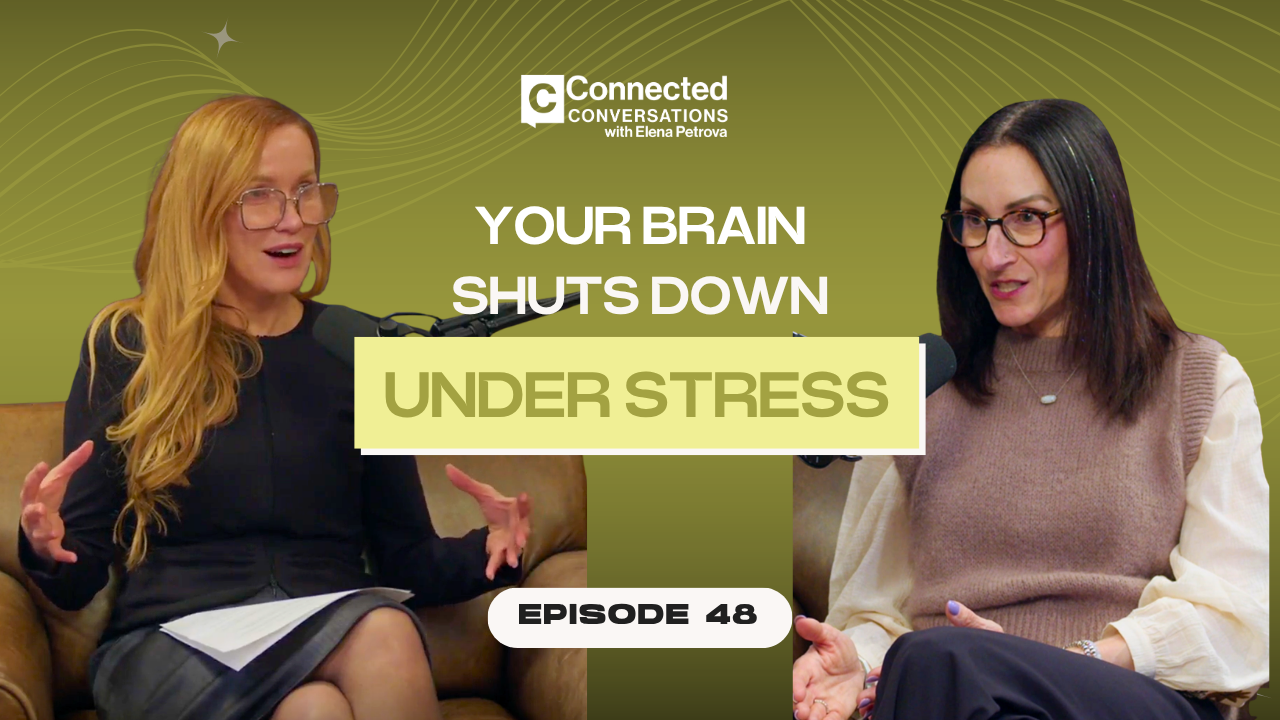
In Episode 48 of Connected Conversations, psychotherapist Brooke Bralove shares a powerful truth: when your brain is in survival mode, your ability to think, listen, and connect begins to shut down.
And yet, we often blame ourselves—or others—for “poor communication,” without realizing what’s really happening underneath.
When the Brain Goes Offline
When we experience stress, fear, or overwhelm, the brain shifts into fight, flight, or freeze.
In that state:
- Comprehension decreases
- Confusion increases
- Emotional reactivity rises
You’re not choosing to communicate poorly—your brain is prioritizing survival over connection.
Understanding this changes everything.
Vicarious Trauma: The Hidden Weight
One of the most overlooked challenges today is vicarious trauma.
You don’t need to experience trauma directly to be affected by it.
If your work—or even your environment—exposes you to:
- Other people’s pain
- Emotional intensity
- Constant stress
…it accumulates.
And ignoring it doesn’t make it go away.
Burnout, Stress, and Trauma Are Not the Same
We often group everything under “burnout,” but Brooke highlights a critical distinction:
- Stress is a temporary pressure
- Burnout is prolonged exhaustion
- Trauma (and vicarious trauma) impacts the nervous system at a deeper level
If you don’t identify what you’re experiencing, you can’t properly address it.
Boundaries Are Not Distance
One of the biggest misconceptions: Setting boundaries pushes people away.
In reality, boundaries are what allow you to stay present long-term.
They protect:
- Your energy
- Your emotional capacity
- Your ability to keep showing up
Without boundaries, even the most meaningful work becomes unsustainable.
Self-Care Is Not Optional
Self-care isn’t a luxury—it’s a responsibility.
Especially for those:
- Supporting others
- Leading teams
- Working in high-stress environments
You cannot pour from an empty cup.
Taking care of your nervous system is what allows you to:
- Communicate clearly
- Make better decisions
- Build stronger relationships
Healing Without Reliving
One of the most hopeful insights from this conversation:You don’t have to relive your trauma to heal from it.Approaches like:
- Accelerated Resolution Therapy (ART)
- Gestalt therapy
allow individuals to keep the knowledge but release the emotional pain.
Small Tools, Big Impact
You don’t need a complete life overhaul to feel better.
Small, consistent actions can regulate your system:
- Limiting news intake
- Breathing and grounding exercises
- Nervous system awareness
- Creating intentional pauses
These micro-shifts compound over time.
Final Thought
Better communication doesn’t start with better words.
It starts with a regulated nervous system.
Because when you feel safe, you can truly connect.
You can watch/listen to this episode here:
🔴 YouTube: https://youtu.be/KTdwPeTCotw
🟢 Spotify: https://shorturl.at/gERAI
⚫ Apple Podcast: https://shorturl.at/Puh6F
🔵 Amazon Music: https://shorturl.at/4tZ22