When Language Is a Matter of Life or Death
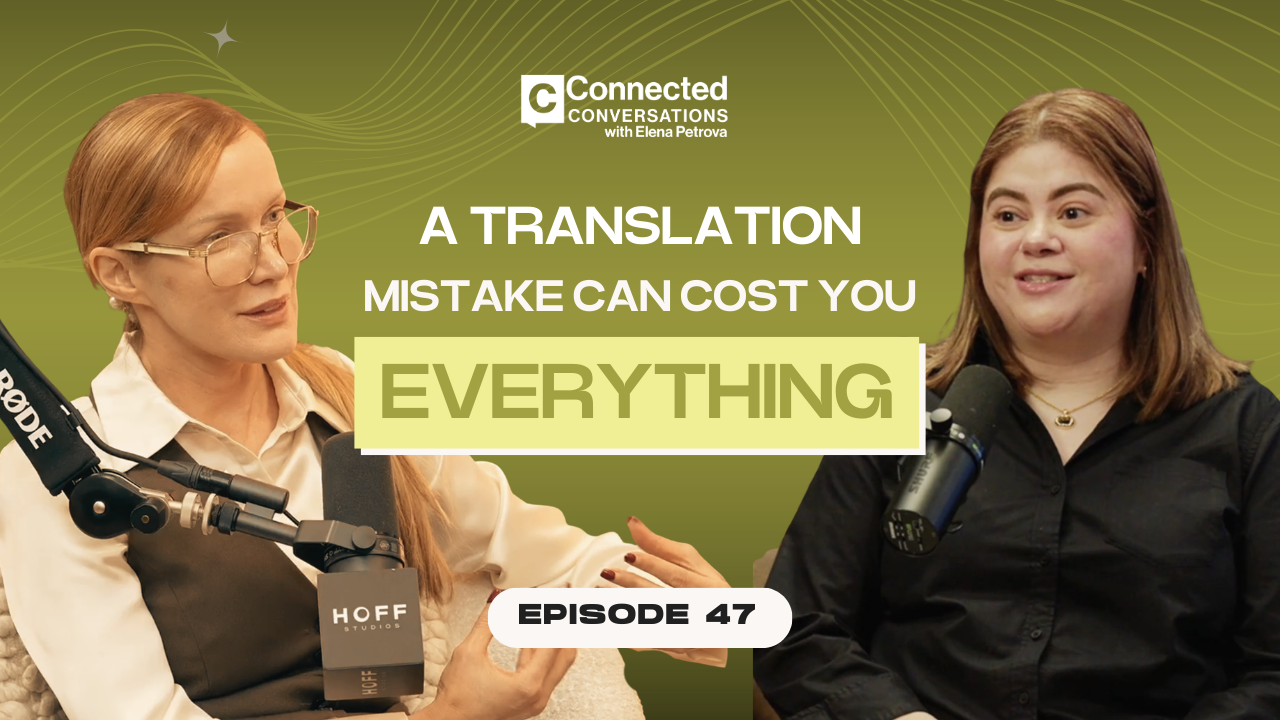
A single word can change everything.
In critical moments, language is not just communication. It is access. It is protection. It is survival.
In this episode of Connected Conversations, Elena Petrova speaks with Marilyn Lovo, Language Access Director at Ayuda, about why language access must be treated as a fundamental human right, not an optional service.
A Translation Mistake Can Cost You Everything
In legal and social service settings, a translation error is not a minor inconvenience.
It can result in:
- Losing custody of a child
- Losing access to housing
- Misunderstanding legal rights
- Being unable to advocate for yourself
These are not hypothetical risks. They are real outcomes experienced by individuals navigating systems without proper language support.
Language Is the First Barrier
For many immigrant communities, language is the first and most immediate obstacle.
Without it, individuals cannot:
- Access healthcare
- Understand legal processes
- Communicate in emergencies
- Advocate for their own rights
Language access determines whether someone is included — or excluded — from the systems designed to support them.
Technology Is a Tool, Not a Replacement
AI and machine translation are evolving rapidly.
They can support efficiency and scale.
But in high-stakes situations, technology alone is not enough.
Human interpreters bring:
- Cultural understanding
- Emotional awareness
- Contextual accuracy
- Ethical judgment
When lives are on the line, there must always be a human in the process.
Trauma-Informed Communication Changes Everything
Working with vulnerable populations requires more than accurate translation.
It requires understanding how to communicate with care.
Trauma-informed communication means:
- Giving people space to speak
- Listening without rushing
- Respecting autonomy and dignity
- Creating a sense of safety
The way something is communicated can be just as important as what is said.
The Community Is the Solution
Language access is not solved by one organization alone.
It requires:
- Cross-sector collaboration
- Government support
- Nonprofit partnerships
- Investment in interpreter workforce development
When communities come together, systems become stronger, more inclusive, and more effective.
The Hidden Cost: Vicarious Trauma
Those working in language access and community services carry the emotional weight of this work.
Supporting vulnerable populations daily comes with:
- Emotional fatigue
- Secondary trauma
- Burnout
Sustainable systems must also support the people doing the work.
Final Reflection
Language access is not about convenience.
It is about equity, dignity, and human rights.
And when it is overlooked, the consequences are not abstract.
They are life-changing.
🔴 YouTube: https://youtu.be/RTKzY708X0s