
How Poor Translation Impacts Customer Experience (And Revenue)
Translation
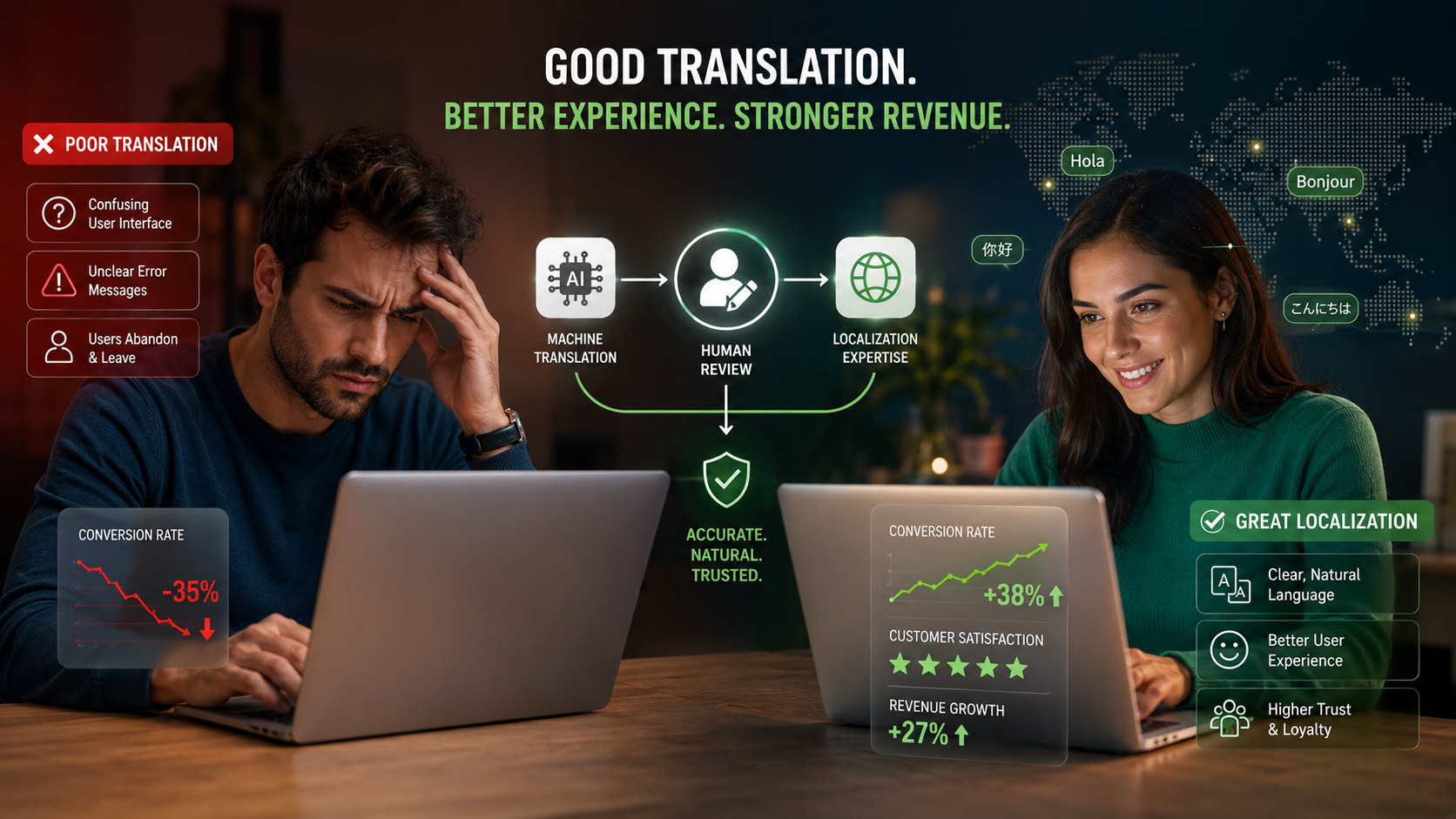
A fast-growing enterprise software firm recently expanded its operations into a major international market. The product was exceptional, the engineering was stable, and the domestic sales funnel was highly optimized. However, within ninety days of launch, the international expansion stalled. Conversion rates plummeted at checkout, user onboarding abandonment spiked, and the customer support team was overwhelmed with tickets.
When leadership audited the system, they uncovered a silent killer: the software's interface and documentation had been run through a cheap, unvetted automation engine without any professional human review.
Important technical buttons had been translated into confusing, non-standard terms. Crucial error messages read as broken computer jargon, and the payment screen used terminology that felt so unnatural it looked like a data security threat. Users didn't stay to figure it out—they simply quit and went to a local competitor.
This scenario plays out across the tech and corporate world daily. When companies expand globally, language is frequently treated as a secondary operational box to tick.
The financial consequences of this approach are severe. When you publish broken language, you do not just disrupt grammar; you fracture your multilingual customer experience (CX), accelerate user churn, and directly drive down your international revenue.
Key Takeaways
-
The Trust Penalty: Over 75% of international buyers will immediately abandon an onboarding sequence or a purchase funnel if the user interface contains broken or awkward translations.
-
Downstream Costs: Cutting corners on language quality creates immediate hidden expenses, including ballooning customer support tickets, lost ad spend, and emergency engineering reworks.
-
Strategic ROI: High-tier localization isn't an administrative expense—it is a measurable revenue driver that shortens global sales cycles and secures international market share.
-
Digital Advertising Waste: Running global marketing campaigns with unnatural phrasing lowers your click-through rates (CTR) and damages your ad relevance scores. This forces your marketing team to pay significantly more per click to get the same results as local competitors.
-
Product Engineering Bottlenecks: If translation providers work without clear technical context, they can accidentally alter code variables or ignore character limits that cause user interfaces to break physically. Your engineering team must then spend expensive development sprints tracking down UI layout bugs rather than building new features.
-
Complex industry or platform terminology.
-
Branded phrases or specific product features that must never be translated.
-
Your specific corporate voice, emotional tone guidelines, and cultural boundaries.
The True Cost of a Broken Multilingual Customer Experience
When a company ignores the impact of poor translation, they rarely factor in how it degrades the day-to-day user experience. Language is the primary interface through which a customer interacts with your digital asset. If that interface feels broken or unnatural, the entire relationship breaks down.
1. Friction and Immediate Abandonment at Checkout
In digital commerce and software sales, friction kills conversions. If a global prospect navigates a clean website but hits a payment gateway where the transaction language is awkward or poorly formatted, they will hesitate.
Mistranslated payment options or confusing account creation text look like data risks. If a checkout page reads poorly because of low-quality translation, users will not trust you with their credit card information. They will close the tab.
2. The Customer Support Nightmare
When software documentation, onboarding tooltips, or technical user manuals are poorly translated, users cannot self-solve basic onboarding steps.
This operational failure shifts the burden directly onto your technical support infrastructure. Support queues fill up with frustrated international users opening tickets for issues that should have been easily answered by a clear, localized help center. The money saved by rushing the initial translation phase is quickly wiped out by the operational cost of managing a clogged support queue.
3. Rapid Churn and Lifetime Value (LTV) Decay
Getting an international customer to sign up once is only half the battle. Long-term profitability relies on retention and Lifetime Value.
If your regular platform updates, promotional notifications, and product feature announcements read like careless, automated afterthoughts, global users will notice. They will quickly migrate to platforms that treat their native language with professional respect.
Hidden Financial Strains of Low-Quality Language Work
The direct loss of immediate sales is easy to spot. However, the indirect, structural costs of poor localization are often buried deeper in your quarterly financial reporting.
Protecting Global Revenue: Maximizing Your Localization ROI
To avoid these operational pitfalls and build a highly profitable global footprint, companies must shift their perspective: language strategy must move from an administrative line-item expense to a core driver of localization ROI.
1. Implement a Human-in-the-Loop Workflow
Automated translation engines are highly effective tools for speed, but they cannot evaluate context, tone, or specific professional standards alone. Implementing a strict hybrid framework—where professional editors review, refine, and polish automated output—ensures your copy remains highly precise without sacrificing production speed.
2. Centralize Project Glossaries and Style Guides
Before kicking off any international project, equip your translation teams with a central corporate glossary. This document should permanently lock down:
This basic preparation removes costly guesswork, ensures brand consistency across your digital assets, and significantly lowers your long-term editing costs.
3. Prioritize Internationalization in Product Design
Ensure your technical product and design frameworks are built from day one to handle multiple languages. Use flexible UI layouts that can scale when text expands, keep text files strictly separated from code repositories, and provide clear visual context to your linguists. The more visual context an editor has, the fewer errors make it to production.
Conclusion: Speak to Your Market Natively
In a highly competitive global economy, your brand's language choices reflect your product's underlying quality.
Publishing broken, unvetted translations signals to an international market that your business does not care about their user experience. Conversely, investing in professional, culturally nuanced language strategy shows a clear commitment to your global users.
When you speak to your customers natively, respect their operational habits, and protect their user journey, you build deep brand loyalty, remove buying friction, and unlock sustainable global revenue.
Frequently Asked Questions
What is the impact of poor translation on a business?
Poor translation damages user trust, lowers checkout conversion rates, increases customer churn, and drives up customer support expenses due to confusing user guides and documentation.
What causes most common software translation errors?
Most translation errors stem from relying on unvetted automation without human review, or failing to give translators visual context, which leads to literal, inaccurate word-for-word translations that break user interfaces.
How does translation improve customer experience?
Professional localization creates a seamless user journey by ensuring that all product copy, software tooltips, payment structures, and customer support pages read naturally and follow the cultural and technical habits of the user's home country.